
Bale Collision Center has published consumer guidance explaining how the depth of paint damage can change the repair considerations after a collision, scrape, or parking lot impact. The October publication focuses specifically on damage that penetrates the exterior coating system and exposes the underlying substrate, distinguishing it from surface-level marks that remain within the finish.
The guidance expands on Bale Collision Center’s auto paint and refinishing information by organizing paint-damage evaluation around three factors: coating depth, the material underneath the finish, and the location and condition of the damaged area.
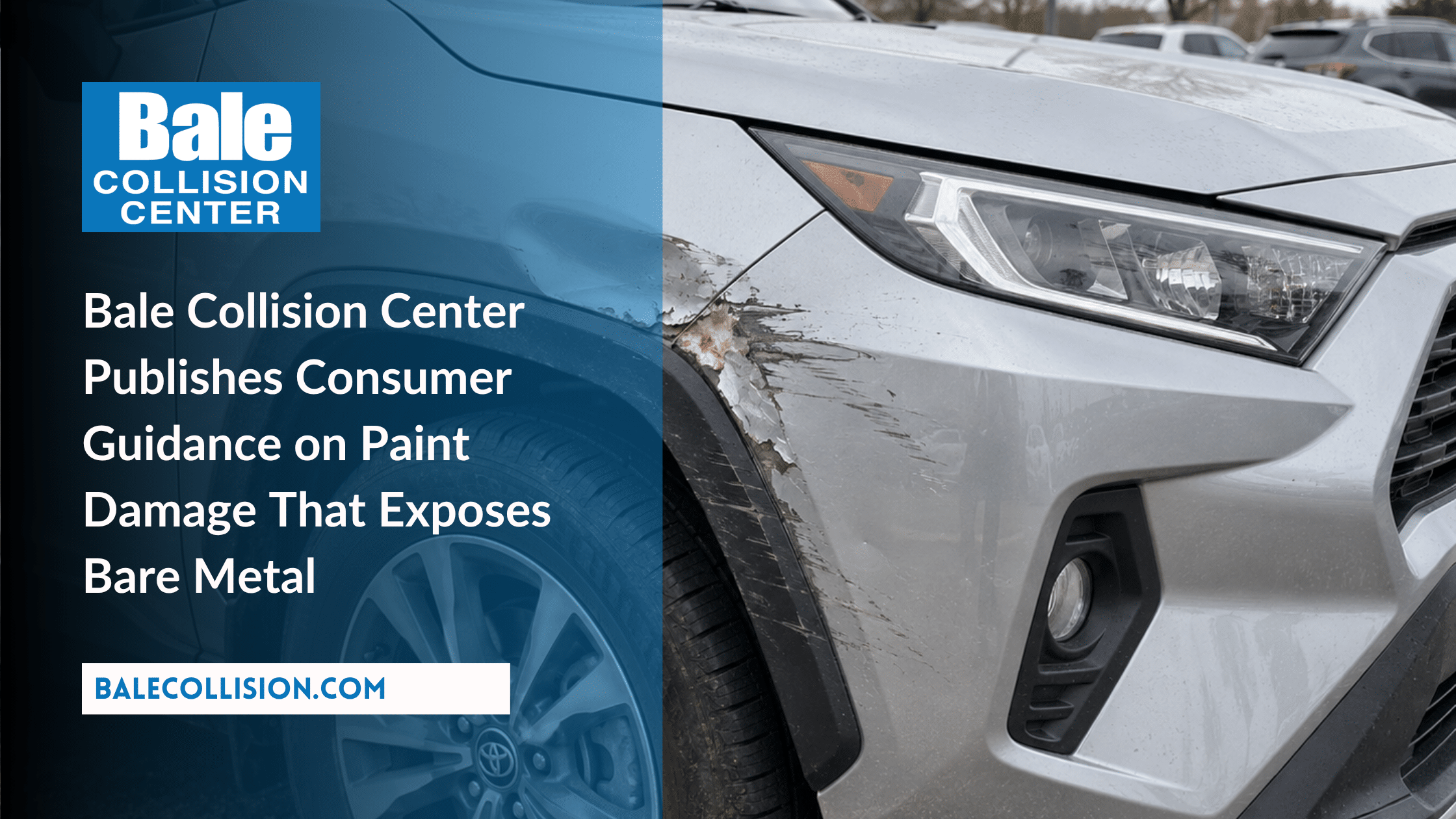
Automotive finishes consist of multiple coating layers rather than a single layer of color. A light mark can remain within the clear coat, while deeper scratches and chips can penetrate additional layers and expose primer or the substrate beneath them. Determining the depth of the damage is therefore an important part of identifying the appropriate repair process.
When steel is exposed, the protective barrier between the metal and environmental conditions has been interrupted. Moisture and contaminants can reach the unprotected surface, creating conditions in which corrosion can develop. The timing and extent of corrosion can vary according to environmental exposure, damage location, and how long the surface remains unprotected.
This distinction is the primary focus of the October publication. A small chip that reaches bare steel can present different considerations from a larger superficial mark that remains within the upper coating layers. Visible size alone does not establish how deeply the finish has been compromised.
The substrate underneath the paint is the second factor. Modern exterior components can include conventional steel, high-strength steel, aluminum, plastics, and other materials. Because these substrates have different characteristics, identifying the affected component helps determine which preparation and refinishing procedures apply.
Plastic bumper covers illustrate the difference. A deep scrape on a plastic component does not expose steel, even when several coating layers have been removed. The damaged component may still require repair and refinishing, but its material creates different considerations from exposed metal on a steel body panel.
Bale Collision Center’s auto body repair information provides additional context when paint damage occurs together with dents, creases, displaced panels, or other collision-related conditions.
Damage location forms the third part of the assessment. Paint loss near a panel edge, wheel opening, seam, or adjoining component can present different conditions from an isolated chip in the center of a panel. The location can affect environmental exposure, repair access, and the preparation needed before refinishing.
Surface preparation becomes particularly important when the coating system has been penetrated. Depending on the documented condition, repair operations can include removing loose or damaged material, preparing the substrate, addressing existing corrosion when present, and restoring applicable coating layers before the finished color and clear coat are applied.
When a dent or crease accompanies the paint damage, body repair generally becomes part of the sequence. The physical condition of the component can be addressed before final surface preparation and refinishing so the repair accounts for both panel shape and coating damage.
The October guidance also distinguishes exterior refinishing from corrosion-protection operations that may accompany more involved collision repairs. Welding, metal straightening, or component replacement can disturb coatings on surfaces that are not readily visible after reassembly. Applicable manufacturer repair information may identify additional protection for specific seams, attachment areas, or repaired surfaces.
This distinction gives consumers a more precise way to understand what happens when collision damage reaches beyond the visible finish. Color matching addresses the appearance of the repaired exterior, while preparation and applicable corrosion-protection procedures address the condition of the surface beneath or behind that finish.
The publication also explains why waiting for visible rust is not the only way to determine whether exposed steel deserves attention. Corrosion may not become immediately visible after coating damage occurs. Evaluating the depth and substrate establishes whether the protective finish has been compromised before deterioration becomes obvious at the surface.
When corrosion is already present, technicians can evaluate its condition as part of preparing the affected area. Bubbling near a paint edge, discoloration, or visible rust can indicate that the repair involves more than restoring color over the damaged location.
The new October guidance differs from general cosmetic paint information by focusing specifically on the transition from finish damage to substrate exposure. It explains why three visually similar scratches can require different approaches when one remains in the clear coat, another reaches underlying coating layers, and another exposes the material beneath them.
For consumers, the practical distinction is whether the damage is limited to appearance or has penetrated the protective coating system. Damage depth, substrate, location, and any accompanying body damage provide a more useful basis for evaluation than the length or width of the scratch alone.
Information about the facility is available through Bale Collision Center’s Downtown Little Rock location resource.
The October publication provides consumers with a focused explanation of why exposed substrate changes the considerations involved in paint repair. When damage reaches bare metal, appropriate surface preparation, restoration of applicable protective coatings, and refinishing can become part of repairing the affected area according to its documented condition.
Bale Collision Center is a family-owned collision repair business that has served the Little Rock community since 1952. The company provides collision repair, auto body repair, automotive paint and refinishing, paintless dent repair, glass replacement, and ADAS services through its two Little Rock locations. Its Downtown facility is located at 100 N Cross St, Little Rock, AR 72201.
###
For more information about Bale Collision Center, contact the company here:
Bale Collision Center (Downtown)
Jason Spiller
(501) 375-0910
jspiller@baleautomotive.com
100 N Cross St, Little Rock, AR 72201, United States
